
The Great Factory Migration: Chinese & Taiwanese Companies Reshaping Vietnam's Economy
Tax Incentives, Tariff Strategies, and the Rise of 'Vietnam+1'

In the industrial parks north of Hanoi, a quiet revolution is underway. Where rice paddies once stretched to the horizon, gleaming factories now hum with activity,producing iPhones, AirPods, Nike sneakers, and Samsung smartphones destined for American living rooms. The workers inside speak Vietnamese, but the managers often speak Mandarin. The factory owners hail from Taipei, Shenzhen, and Shanghai. And the reason they're here, rather than in China, can be summed up in two words: American tariffs.
This is the story of the great factory migration,how Chinese and Taiwanese companies are transforming Vietnam into the world's next manufacturing superpower, the tax advantages driving this shift, the major brands now "Made in Vietnam," and what it all means for Vietnam's economy and the global supply chain.

THE SCALE OF THE MIGRATION

Vietnam's Foreign Investment Boom
Vietnam has quietly become one of the world's hottest destinations for foreign investment, particularly in manufacturing. According to Mekong Capital, as of December 2024, the country hosts an astonishing $502.8 billion in foreign direct investment across 42,002 active projects. The momentum shows no signs of slowing: Trading Economics reports that in the first eleven months of 2025, Vietnam attracted $23.6 billion in realized FDI, marking a 8.9% year-on-year increase and the highest level in five years. FDI pledges for the same period reached $33.69 billion, signaling strong investor confidence in the country's future.
What makes Vietnam's story remarkable is where this money is going. According to Vietnam Briefing's Manufacturing Tracker, a full 82.9% of realized FDI flows into processing and manufacturing, factories making everything from semiconductors to sneakers. This manufacturing-heavy investment has helped propel Vietnam's GDP growth to 8.23% in the third quarter of 2025, the fastest rate in Southeast Asia. As reported by LSEG/FTSE Russell, the country's stock market rallied 57.7% in 2025, and in a milestone moment, FTSE Russell announced Vietnam's upgrade from Frontier Market to Emerging Market status, effective September 2026.
The Investment Giants: Korea, Taiwan, and China
South Korea stands as Vietnam's largest foreign investor by accumulated capital. According to VietnamNet, Korean companies have poured $94 billion into over 10,329 projects. The crown jewel of Korean investment is Samsung, which has invested $23.2 billion to build an electronics empire in Vietnam. According to the OECD Economic Survey of Vietnam 2025, Samsung produces roughly half of its global smartphones in Vietnamese factories, employs 112,000 workers, and single-handedly accounts for approximately 20% of Vietnam's total exports, contributing $54.4 billion in 2024 alone. As noted by InCorp Vietnam, Korean FDI drives roughly 30% of Vietnam's total exports.
Taiwanese investors have accumulated $39-40 billion in Vietnam over the decades, with around $2.8 billion invested in 2024 alone (InCorp Vietnam). Taiwan's contribution is most visible in the electronics sector, where companies deeply embedded in Apple's supply chain have established major operations. Foxconn, Apple's largest contract manufacturer, has invested over $1.5 billion in Vietnam and employs more than 53,000 workers. According to the Global Taiwan Institute, Foxconn plans to move 30% of its production outside China by 2025. Other Apple suppliers, Pegatron, Wistron, and Compal, are expanding rapidly in the northern provinces, while Quanta Computer, which manufactures MacBooks, signed an agreement to begin production in Vietnam in April 2023.
Chinese investment is the fastest-growing and perhaps most geopolitically significant piece of the puzzle. According to Rest of World, in 2023, China had the highest number of newly registered projects in Vietnam, accounting for over 22% of the total. By the first eleven months of 2025, China ranked as the second-largest investor, contributing 21.3% of new capital through 406 new manufacturing projects. Goertek, which assembles Apple's AirPods, has invested over $1.3 billion in Bac Ninh province to build four factories (Vietnam Investment Review). As Chinese companies build factories in Vietnam, towns like Bac Ninh have transformed into cultural hubs with Chinese restaurants, bubble tea shops, and Mandarin language centers, a "tech worker Chinatown" that didn't exist a decade ago.
WHY VIETNAM? THE DRIVING FORCES
The Tariff Factor: Escaping the US-China Trade War
The primary driver of the factory migration is straightforward: American tariffs on Chinese goods have made manufacturing in China prohibitively expensive for products destined for US consumers. According to Vietnam Briefing's tariff analysis, as of 2025, the cumulative tariff on Chinese imports to the United States stands at a staggering 104%. By contrast, under the July 2025 trade deal between the US and Vietnam, Vietnamese-origin goods face only a 20% tariff, a massive 84-percentage-point advantage.
The math is compelling. For a manufacturer selling into the American market, shifting production from China to Vietnam can transform the economics of an entire product line. As reported by Rest of World, one Chinese factory owner told journalists: "At first, [people] moved here because Apple forced them to."
There is, however, a catch. According to Vietnam Briefing's transshipment analysis, the US has imposed a 40% tariff on goods identified as transshipped, Chinese products routed through Vietnam with minimal processing to evade higher tariffs. This creates a complex compliance landscape that we'll explore later, but it hasn't stopped the flood of investment into legitimate Vietnamese manufacturing.
Tax Incentives: Vietnam's Competitive Edge
Beyond tariff advantages, Vietnam offers some of the most aggressive tax incentives in Asia to attract manufacturing investment. According to PWC's Vietnam Tax Summary, the country's standard corporate income tax rate is 20%, already lower than China's 25%, but qualifying investors can access far more favorable terms.
For high-tech manufacturing, special economic zones, and projects in disadvantaged areas, Vietnam offers a preferential rate of just 10% for the first 15 years of revenue generation. As detailed by Vietnam Briefing's tax incentives guide, qualifying projects can receive up to four years of complete tax exemption, followed by nine years at 50% reduction. For a high-tech enterprise, this means paying no corporate income tax for years one through four, then 5% (half of the 10% preferential rate) for years five through thirteen, then 10% for years fourteen and fifteen, before reverting to the standard 20% rate.
The priority sectors receiving these incentives align perfectly with the industries fleeing China: semiconductor design and manufacturing, high-tech manufacturing and R&D, electronics and digital technology products, supporting industries for textiles and auto parts, renewable energy, and AI data centers. Additional benefits include import duty exemptions for goods used to create fixed assets, land rent exemptions for 3-15 years depending on location, and VAT refunds for export-oriented manufacturers.
It's worth noting that according to Alvarez & Marsal, Vietnam's new Corporate Income Tax law, effective October 2025, removes industrial zones from the list of automatically incentivized locations, a sign that Vietnam is becoming more selective about its incentives. However, existing projects retain their benefits, and sector-based incentives for high-tech and strategic industries remain robust.
Labor Costs and Workforce
Vietnam's labor cost advantage remains significant. Average manufacturing wages run $250-400 per month,roughly 30-50% lower than comparable wages in China. Minimum wages, set by region, range from VND 3.45 million to VND 4.96 million ($135-195) per month. This cost differential matters enormously for labor-intensive industries like footwear, apparel, and electronics assembly.
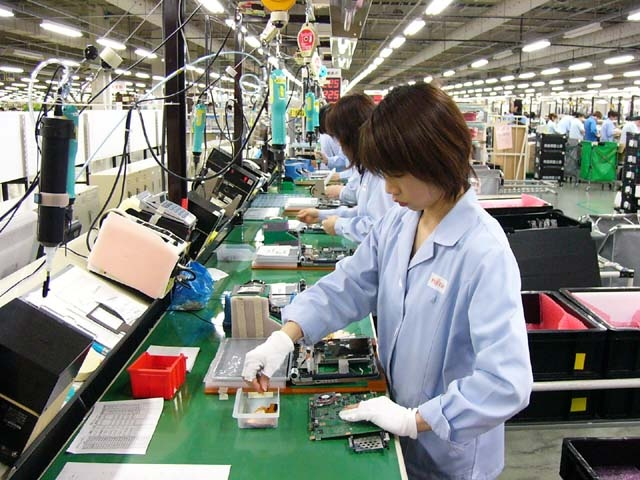
The workforce backing these factories is substantial: 52.5 million workers with a 69% labor force participation rate. Over 28% now hold formal training certificates or degrees, and vocational training programs are expanding to meet the demands of higher-tech manufacturing. That said, skills gaps persist,particularly in advanced electronics and semiconductor manufacturing, where experienced managers and engineers remain in short supply. Many Chinese and Taiwanese factories bring in managers from their home countries, with some large facilities employing hundreds of Chinese workers alongside tens of thousands of Vietnamese.
Strategic Location and Trade Agreements
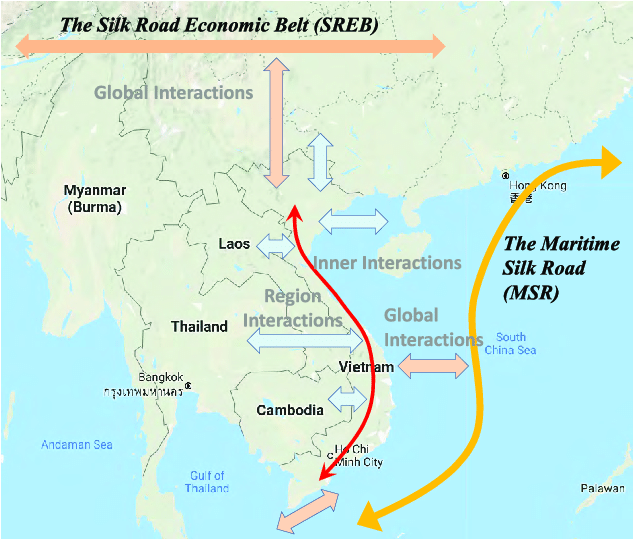
Vietnam's geography works in its favor. The country borders China's Guangxi province, making it easy to integrate with existing Chinese supply chains,materials and components can be trucked south across the border with relative ease. Major deep-water ports at Hai Phong, Da Nang, and Ho Chi Minh City connect Vietnamese factories to global shipping routes. Perhaps most importantly, Vietnam has signed 16 free trade agreements, including the CPTPP (Comprehensive and Progressive Agreement for Trans-Pacific Partnership), the EVFTA (EU-Vietnam Free Trade Agreement), and RCEP (Regional Comprehensive Economic Partnership). These agreements provide preferential access to markets across Asia, Europe, and the Pacific,a significant advantage over competitors like India or Indonesia.
THE BRANDS MADE IN VIETNAM
Electronics and Technology
The electronics sector has been transformed by foreign investment, with Vietnam now serving as a critical production hub for the world's largest technology companies. Samsung leads the way, producing roughly half of its global smartphones in eight Vietnamese factories and contributing $54.4 billion to Vietnam's exports in 2024. The Korean giant's presence has been transformative: Vietnam is now the world's second-largest smartphone exporter.
Apple products are increasingly "Made in Vietnam" through the company's network of Taiwanese and Chinese suppliers. The company operates through at least eleven factories via partners including Foxconn, Luxshare, Pegatron, and Wistron. AirPods assembly moved to Vietnam several years ago, and production of iPads, Apple Watch, and MacBooks has followed. During a meeting with Vietnam's Prime Minister, Apple CEO Tim Cook expressed interest in involving more Vietnamese suppliers,a signal of deeper commitment to come. Goertek, the Chinese company that assembles AirPods, has invested over $1.3 billion in Bac Ninh province alone.
Beyond Apple and Samsung, Vietnam hosts a remarkable roster of technology manufacturing. Intel operates semiconductor testing and assembly in Hanoi, representing a major investment in chip manufacturing. LG produces televisions, home appliances, and mobile devices in Hai Phong and Ho Chi Minh City. Canon manufactures printers and cameras in Bac Ninh, while Sony and Panasonic produce audio-visual equipment and consumer electronics in Binh Duong province. Google now manufactures its Pixel phones in Vietnam, and Microsoft relocated Surface tablet production from China. In 2025, tech giants including Nvidia, Qualcomm, and Ericsson announced plans to expand their presence.
The scale of this electronics migration is captured in a single statistic: electronics now account for over 30% of Vietnam's total exports, reaching $72.6 billion in 2024. For the first time in history, Vietnam's electronics exports to the United States have surpassed garments and textiles.
Footwear and Apparel
If electronics represents Vietnam's future, footwear represents its present,and it's a dominant present indeed. Vietnam has become the world's footwear factory, producing over 1.3 billion pairs of shoes annually across more than 2,200 factories.
Nike has made Vietnam the center of its global manufacturing. According to the company's supplier list, Nike engages approximately 159 factories across Vietnam to produce shoes, apparel, and equipment for both Nike and Converse brands. Vietnam now accounts for 50% of Nike's global footwear production and 28% of its apparel, employing roughly 337,000 factory workers,more than any other country. The bulk of Nike's 64 footwear factories are concentrated in southern Vietnam, in and around Ho Chi Minh City, though a handful operate in the north.
Adidas follows a similar pattern, operating 156 factories in Vietnam that employ nearly 254,000 workers and produce approximately 40% of the company's global footwear. These factories are concentrated in southern Vietnam's Dong Nai province. Crocs produces 53% of its iconic foam clogs in Vietnam, while VF Corporation,owner of Vans, Timberland, The North Face, Dickies, and Jansport,works with 208 supplier firms in the country. Deckers, known for UGG and HOKA brands, now operates 14 Tier 1 footwear factories in Vietnam compared to just three in China, making Vietnam central to its supply chain. Puma and Uniqlo maintain significant production as well.
The concentration of major brands has created a dense ecosystem of contract manufacturers. Taiwanese companies like Pou Chen (which produces for Nike, Adidas, and Puma), Chang Shin (a major Nike supplier), and Ching Luh operate massive facilities employing tens of thousands of workers each. These aren't small operations,a single Chinese-owned footwear manufacturer might employ 200 Chinese workers alongside 10,000 Vietnamese workers, with mid-level managers fluent in Vietnamese, Mandarin, and English.
Other Industries
The manufacturing migration extends beyond electronics and footwear. IKEA has sourced from Vietnam for over two decades, with the country now providing approximately 3% of IKEA's global wood supply,the second-highest percentage in Asia after China. TCL is shifting television production to Vietnam, while Mitsubishi has opened an assembly plant in the central province of Binh Dinh. German automotive supplier ZF has established production in the country, and furniture manufacturing has grown steadily as companies seek alternatives to Chinese production. Food and beverage processing, textiles beyond footwear, and increasingly sophisticated component manufacturing round out a diverse industrial base.
VIETNAM'S MANUFACTURING GEOGRAPHY
The Northern Electronics Corridor
Vietnam's manufacturing geography divides roughly into two zones, each with distinct specializations. The northern provinces have emerged as the country's electronics powerhouse, anchored by proximity to China and deep-water port access at Hai Phong.
Bac Ninh province leads the nation in newly registered manufacturing FDI, accounting for 13.8% of total investment. It hosts Samsung's massive operations, Goertek's AirPods factories, and Canon's printer manufacturing. The province has transformed so dramatically that an emerging "Chinatown" has sprouted,complete with Chinese restaurants, bubble tea shops, and Mandarin language centers serving the influx of Chinese tech workers and managers. Hai Phong captures 10.5% of new FDI, leveraging its deep-water port to support LG's operations and the growing Foxconn and Pegatron presence. Bac Giang has become a key node in the electronics supply chain, hosting Foxconn expansion projects. Thai Nguyen is home to Samsung mobile phone production, while Hung Yen captures 7% of new FDI with a growing electronics presence.
The Southern Footwear and Apparel Hub
Southern Vietnam, centered on Ho Chi Minh City, remains the heartland of footwear and apparel manufacturing, industries that established Vietnam's export credentials long before the electronics boom.Ho Chi Minh City and its surrounding provinces have a long history with garment and textile production, providing the skilled workforce and supplier networks that attract global brands.Dong Nai province, capturing 9.8% of new FDI, is particularly notable as the concentration point for Adidas (with 61 factories) and major contract manufacturers like Pou Chen and Chang Shin.Binh Duong hosts Sony, Panasonic, and diversified manufacturing operations, whileLong An is home to Vietnam Chingluh Shoes and other footwear operations. Two-thirds of Nike's factory workers in Vietnam,roughly 276,000 people,are located in the southern region.
RISKS AND CHALLENGES

The Transshipment Trap
The biggest risk facing Chinese and Taiwanese manufacturers in Vietnam is the US crackdown on transshipment,the practice of routing Chinese goods through Vietnam with minimal processing to evade American tariffs. Under the July 2025 trade agreement, goods identified as transshipped face a 40% tariff, double the 20% rate for legitimate Vietnamese-origin products.
The challenge is that the US has not published a clear definition of what constitutes transshipment. Trade analysts fear the administration may adopt a "near-zero tolerance" standard, potentially flagging goods with even minimal Chinese content. White House trade adviser Peter Navarro has claimed that roughly a third of Vietnam's exports to America are transshipments from China, stating that "about $5 of every $15 of goods Vietnam sells the United States is just Chinese product that comes into Vietnam, they slap a 'Made in Vietnam' label on it and they send it here to evade the tariffs."
Academic estimates vary significantly. A Harvard University study found that from 2018 to 2021, only 8.8% of Vietnam's export growth to the US could be attributed to rerouting at the provincial level, while broader estimates range from 15.7% to 41.7%. The uncertainty itself creates problems: without clear guidance, US importers face the risk that their legitimate Vietnamese-made products could be steeply taxed as transshipments.
Under existing trade rules, goods typically need to meet one of two tests to qualify as Vietnamese origin: either a tariff classification change (the finished product falls under a different Harmonized System code than its inputs) or a regional value content test requiring 35-40% Vietnam-added value. The irony is that if transshipment rules are applied too broadly, US importers may find it cheaper to buy directly from China at 104% tariff than risk the 40% Vietnam penalty on products of uncertain origin.
Dependence on Chinese Inputs
Vietnam's manufacturing miracle has a hidden vulnerability: deep reliance on Chinese components and raw materials. Many Vietnamese factories, including those owned by Taiwanese and Chinese companies, source essential inputs from China,electronics components, plastics, metal parts, and specialized materials. This creates a supply chain vulnerability that became painfully apparent during COVID-19 disruptions. More concerning in the current trade environment, a single Chinese-origin chip, zipper, or motor could theoretically trigger the 40% transshipment tariff on an entire product if US customs applies a strict interpretation. For companies whose products incorporate any Chinese content, maintaining detailed documentation and demonstrating substantial transformation in Vietnam has become critical.
The Geopolitical Tightrope
Vietnam finds itself walking a delicate line between the world's two superpowers. On one side, the United States is demanding crackdowns on transshipment and stricter origin controls,essentially asking Vietnam to police the flow of Chinese goods through its territory. Vietnam has signaled willingness to comply, with the Government Office directing trade and customs officials to devise plans to address illicit transshipment.
On the other side, China looms large. If Vietnam is seen as limiting access for Chinese-linked products, Beijing may retaliate. Potential responses could include restricting Vietnamese agricultural imports, delaying customs clearance of Chinese exports to Vietnam, reducing investment flows, or even escalating tensions in the South China Sea. However, China's options are somewhat constrained by its own economic interests,it exports significantly to Vietnam and has invested heavily in the country. Any aggressive response risks backfiring and harming Chinese companies that have already committed billions to Vietnamese operations. Furthermore, heavy-handed retaliation would undercut China's image as a constructive regional leader, particularly compared to its characterization of America as a "bully."
Infrastructure and Capacity Constraints
Success brings its own problems. Industrial land costs in Vietnam have risen sharply, with long-term lease rates reaching $90 per square meter in some industrial parks,up from $60-70 in 2017. Monthly factory rental has climbed to $4 per square meter from $3 previously. Lead times can be longer than China's highly optimized production systems, and companies sometimes struggle to scale supplier capabilities or ensure consistent quality. Skills gaps persist in high-tech manufacturing, with a shortage of experienced managers often requiring companies to bring in staff from mainland China or Taiwan. The power grid faces challenges as manufacturing capacity expands. And while Vietnam's infrastructure has improved dramatically, it still cannot match the logistics sophistication that decades of development have created in China's coastal manufacturing zones.
IMPLICATIONS FOR VIETNAM'S ECONOMY
The Transformation Story
The factory migration has accelerated Vietnam's already remarkable economic transformation. GDP growth hit 8.23% in Q3 2025,among the fastest rates in the world,and the government has set its sights on building a $500 billion economy. Manufacturing now accounts for over 36% of GDP and a stunning 86% of exports, up from 49% of exports just two decades ago. In absolute terms, exports have grown from $19 billion in 2002 to $391 billion in the first ten months of 2025.
The investment boom has translated into jobs. Employment in industrial enterprises grew 4.8% year-on-year as of March 2025, and foreign firms now employ 35% of the formal workforce. Roughly half of all employment depends directly or indirectly on exports. Wages have risen steadily, with average earnings reaching VND 8.3 million (approximately $321) per month in early 2025. Vietnam's stock market upgrade from Frontier to Emerging Market status,the first such upgrade in years,signals international recognition of the country's economic progress and should attract new waves of portfolio investment.
The Structural Concerns
Yet Vietnam's success carries significant risks. The most fundamental concern is limited technology transfer. Foreign-owned firms have developed few supplier links to local companies. The OECD's 2025 economic survey notes that despite Samsung's massive presence, the technology giant had only four Vietnamese tier-1 suppliers in 2014,all relegated to supplying packaging materials, while 63 foreign firms (53 of them Korean) supplied more sophisticated components. Of Samsung's 112,000 employees in Vietnam, 89% are secondary school graduates performing assembly work, with only 4% holding university degrees. The pattern suggests Vietnam risks becoming stuck in an assembly role rather than moving up the value chain to capture higher-value activities like design, engineering, and component manufacturing.
The dominance of foreign investment creates its own vulnerability. Foreign firms account for over 75% of Vietnam's exports, and the FDI sector contributed $295.66 billion of the $391 billion in exports during January-October 2025. One company,Samsung,accounts for roughly 20% of all Vietnamese exports. This concentration means that decisions made in Seoul, Taipei, or Cupertino can have outsized impacts on Vietnam's economy. If a single major investor were to reduce operations, the ripple effects would be substantial.
Other structural issues persist. Two-thirds of Vietnamese workers lack formal contracts or social insurance, limiting their economic security. The World Bank's September 2025 report warned that short-term export gains "mask structural weaknesses in consumption, finance, fiscal reliance, and tech talent." Despite robust growth numbers, approximately 21,200 Vietnamese firms exit the market monthly,a reminder that the benefits of the manufacturing boom are not universally shared. Regional disparities remain stark, with the southeast industrial hub paying far more than northern or central provinces, and informal employment remains pervasive despite efforts at formalization.
OPPORTUNITIES AHEAD
Vietnam's Path Forward
Vietnam is acutely aware of the need to move beyond assembly work, and several initiatives aim to capture more value from the manufacturing boom. The government has launched an ambitious push into semiconductors, targeting 50,000 trained semiconductor engineers by 2030 and attracting $11.6 billion in investment to the chip sector. Local universities are launching chip-design programs to build domestic capabilities. The country is also moving from final assembly toward more sophisticated activities: production of printed circuit boards, sensors, and optical components rather than just putting finished products into boxes.
The electric vehicle transition presents another opportunity. Vietnam is home to VinFast, Southeast Asia's first homegrown EV manufacturer, and the broader EV ecosystem could generate up to 6.5 million new jobs across the value chain by 2050. If current trajectories continue, Vietnam is on track to achieve upper-middle-income status by 2030. The government is also pressing the United States for recognition as a market economy,a status that would reduce trade barriers and validate Vietnam's economic reforms. Whether these ambitions translate into reality will depend on investments in education, infrastructure, and the development of local supplier capabilities.
Opportunities for Investors
For businesses navigating the shifting landscape of global manufacturing, Vietnam remains one of the most attractive options for supply chain diversification. The "China Plus One" strategy,maintaining Chinese operations while adding alternative production sites,has found its most compelling destination in Vietnam. Tax incentives remain robust for high-tech and green projects, even as the government becomes more selective about location-based benefits. Industrial real estate is booming, with Bac Ninh, Hai Phong, and Dong Nai emerging as key markets. A growing middle class (43% of GDP now comes from services) is expanding domestic consumption opportunities. And critically, companies that invest in robust origin traceability, value-add documentation, and genuine Vietnamese content will be best positioned to navigate the evolving tariff and transshipment landscape.
CONCLUSION: THE NEXT CHAPTER
Vietnam's transformation from rice paddies to iPhone factories represents one of the most dramatic economic shifts of our era. Driven by American tariffs, enabled by Vietnamese tax incentives, and executed largely by Chinese and Taiwanese capital, it's reshaping global manufacturing in ways that will reverberate for decades.
The factory migration is real and substantial. Samsung, Foxconn, Goertek, and hundreds of other companies have voted with billions of dollars. Nike makes more shoes in Vietnam than anywhere else on Earth. Apple's AirPods come from Bac Ninh. Google's Pixel phones are assembled in Vietnamese factories. The numbers don't lie: Vietnam has become indispensable to global supply chains.
But challenges loom large. Transshipment rules threaten to complicate the intricate China-Vietnam manufacturing nexus, potentially penalizing legitimate operations alongside true tariff evasion. Geopolitical tensions require careful navigation as Vietnam tries to satisfy American demands without provoking Chinese retaliation. And Vietnam must climb the value chain,developing local suppliers, transferring technology, and building design and engineering capabilities,to avoid becoming merely "China's assembly floor" rather than a genuine manufacturing power.
For Vietnam, the stakes couldn't be higher. Get it right, and the country joins the ranks of Asian Tigers,South Korea, Taiwan, Singapore,that parlayed manufacturing prowess into developed-economy status. Get it wrong, and it remains stuck in the middle-income trap, assembling other people's products without capturing the real value, vulnerable to the next shift in tariff policy or supply chain strategy.
For now, the factories keep humming, the workers keep coming, and the "Made in Vietnam" labels keep spreading across the globe. In the great reshuffling of global manufacturing, Vietnam has positioned itself at the center of the action. The next decade will determine whether that position becomes a launching pad for lasting prosperity or merely a way station in the endless search for lower costs.
Sources & Further Reading
工厂大迁移:
中国和台湾企业重塑越南经济
税收优惠、关税策略与"越南+1"战略的兴起
在河内以北的工业园区,一场革命正在悄然进行。曾经一望无际的稻田如今被闪亮的工厂取代,崭新的工厂正忙于生产iPhone、AirPods、耐克运动鞋和三星智能手机,这些产品将被运往美国的千家万户中。工厂里的工人们说着越南语,但管理人员却往往说着普通话。这些工厂的老板们大多来自台北、深圳和上海。他们之所以选择在这里而非在中国的原因可以用一个关键词来概括:美国关税。
这便是制造业工厂大迁移的故事,讲述了中国和台湾的企业们如何将越南转变为下一个全球制造业巨头,税收优惠是如何推动这一转变的,一众知名品牌都变为"越南制造",而这一切对越南经济和全球供应链又意味着什么。
第一部分:迁移的规模
越南的外资热潮
越南已悄然成为全球最受欢迎的外商投资目的地之一,尤其深受制造业喜爱。湄公河资本公司(Mekong Capital)称,截至2024年12月,该国共计拥有42,002个运营中项目,外商直接投资总额高达惊人的5028亿美元。这一趋势丝毫未减弱,根据《宏观交易网》(Trading Economics)报道,在2025年前11个月里,越南实际吸引外资总额达到236亿美元,同比增长8.9%,为五年来最高水平。同期的外资承诺额达到336.9亿美元,表明投资者对越南未来充满信心。
越南的故事之所以如此令人瞩目,则是因为这笔资金的流向。根据《越南简报》(Vietnam Briefing)的制造业追踪报告显示,实际流入越南的外商直接投资中,有高达82.9%流入加工制造业,涵盖从半导体到运动鞋制造的各类工厂。这种以制造业为主的投资推动越南2025年第三季度的GDP增长率达到8.23%,成为东南亚增长速度最快的国家。据富时罗素(LSEG/FTSE)报道,越南的股市在2025年间上涨了57.7%,在这一里程碑时刻,富时罗素宣布越南将于2026年9月从“前沿市场”转变为“新兴市场”。
投资巨头:韩国、台湾和中国大陆
韩国是越南最大的外资来源国,投资总额位列榜首。据《越南网》(VietnamNet)报道,韩国企业已向超过10,329个项目中投入了940亿美元。韩国投资的亮点是三星,它已投资232亿美元在越南建立电子帝国。根据《2025年越南经济调查报告》(Economic Survey of Vietnam 2025)显示,三星也有一半的智能手机都在越南工厂生产的,雇佣了112,000名员工,三星在2014年就贡献了544亿美元,约占越南总出口总额的20%。根据越南国际公司称,韩国的外商直接投资约占越南总出口额的30%。
在过去的几十年里,台湾投资者在越南累计投资390-400亿美元,根据越南投资公司统计,仅2024年就投资了约28亿美元。台湾在电子行业的投资最为显著,那些深度嵌入苹果供应链的企业在越南开展了大规模的业务。富士康,作为苹果最大的代工制造商,也在越南投资超过15亿美元,并雇佣了超过53,000名员工。据全球台湾研究所(Global Taiwan Institute)称,富士康计划到2025年将30%的生产转移到中国以外的地区。而其他苹果供应商,如和硕、纬创和仁宝,正在在北部省份快速扩张,生产MacBook的广达电脑则在2023年4月签署合作协议,称将要在越南生产。
中国大陆的投资是这一系列投资中增长最快且在地缘政治意义最重大的部分。据美国科技媒体Rest of World报道,在2023年,中国在越南新注册的项目数量最多,占总数的22%以上。到2025年前11个月,中国成为第二大投资者,通过406个新制造业项目,贡献了21.3%的新资本。负责组装苹果AirPods的歌尔声学也在北宁省投资超13亿美元,已经建立了四家专门工厂(越南投资评论)。随着中国企业在越南建厂,北宁等城镇已转变为文化中心,中餐馆、奶茶店和中文语言中心应运而生,这是十年前不存在的"科技工人唐人街"。
第二部分:为什么是越南?
关税因素:逃离中美贸易战
工厂迁移的主要驱动力很简单:美国对中国商品征收的关税使得在中国生产面向美国消费者的产品时变得成本高昂。据越南简报的关税分析称,截至2025年,中国对美国的进口商品累计关税高达惊人的104%。相比之下,根据2025年7月美越贸易协议,越南原产商品仅需要缴纳20%关税,形成了高达84个百分点的巨大优势。
这个数字很有说服力。对于面向美国市场的制造商来说,将生产从中国转移到越南整条产品线的经济效益产生巨大变革。Rest of World报道,一位中国工厂老板告诉记者:"起初,人们搬到这里是因为苹果强迫他们这样做。"
然而,这里有一个问题:美国对被认定为转运的商品会征收40%的关税,即那些中国产品经越南转运且仅进行了少量加工的中国产品所应缴纳的关税。这导致了更复杂的合规环境,我们稍后会进行探讨,但这种情况并未阻止对越南合法制造业的大量投资。
税收优惠:越南的竞争优势
除了关税优势外,越南还提供亚洲最优惠的税收激励政策来吸引制造业投资。根据普华永道的《越南税务概览》,该国标准的企业所得税率为20%,低于中国的25%,且符合条件的投资者可以获得更优惠的条件。对于高科技制造业、经济特区和位于贫困地区的投资项目,越南在开始盈利的前15年提供仅为10%的优惠税率。正如《越南简报》的税收激励指南所详细说明的那样,符合条件的项目可享受长达四年的完全免税待遇,之后是九年减免一半的征收。对于一家高科技企业而言,这意味着在第1至4年无需缴纳企业所得税,第5至13年缴纳5%(即税率优惠的一半)的税款,第14至15年缴纳10%的税款,之后将恢复到标准的20%税率。
这些激励措施所针对的重点行业与那些正在撤离中国的产业完全吻合:半导体设计和制造、高科技制造业和研发、电子和数字技术产品、纺织和汽车零部件等配套产业、可再生能源和人工智能数据中心。此外,还有额外的优惠措施,福利包括用于建设固定资产的货物免征进口关税、根据所在地点不同有3到15年的土地租金减免,以及出口型企业可获得增值税退税。
劳动力成本和劳动力
越南的劳动力成本优势仍然显著。制造业的平均工资为每月250至400美元,该水平工资比中国同类工资低约30至50%。各地区的最低工资标准有所不同,范围在345万越南盾/月到490万越南盾/月(135-195美元)之间。这种费用上的差异对劳动力成本影响巨大,诸如鞋类、服装和电子产品组装等高技术密集型产业。
这些工厂所依赖的劳动力规模庞大:共有5250万工人,劳动参与率为69%。目前超过28%的人拥有正式的培训证书或学位,而且职业培训项目也在不断增多,以满足高科技制造业的需求。不过,技能差距依然存在,尤其是在先进的电子和半导体制造业领域,仍然缺少具备丰富经验的管理人员和工程师。许多中国大陆和台湾地区的工厂会从本国引进管理人员,其中一些大型工厂尤为明显。这些工厂雇佣了数百名中国工人,同时还雇佣了数万名越南工人。
战略位置和贸易协定
越南的地理位置也十分有利,毗邻中国广西省,便于轻松融入现有的中国供应链,原材料和零部件可以相对便捷地通过边境运往南方。海防、岘港和胡志明市等地的大型深水港口将越南工厂与全球航运路线连接起来。也许最重要的是,越南已签署了16项自由贸易协定,包括《全面与进步跨太平洋伙伴关系协定》(CPTPP)、《越南-欧盟自由贸易协定》(EVFTA)和《区域全面经济伙伴关系协定》(RCEP)。这些协定为越南提供了进亚洲、欧洲和太平洋市场的优惠准入条件,这比印度或印度尼西亚等竞争对手具有显著优势。
第三部分:越南制造的品牌
电子科技
电子行业因外国投资而发生了巨大变革,越南如今是全球大型科技公司的重要生产基地。三星处于领先地位,其近一半的全球智能手机都是在越南的八家工厂生产出来的,并且2024年为越南出口贡献544亿美元。越南现已成为世界第二大智能手机出口国。
苹果产品正越来越来地成为“越南制造”,正是由于该公司通过其台湾和中国供应商网络来实现的。该公司通过包括富士康、立讯精密、和硕以及纬创等合作伙伴正运营着至少11家工厂。AirPods组装几年前就已迁至越南,iPad、Apple Watch和MacBook的生产也紧随其后。在与越南总理的会面中,苹果公司首席执行官Tim Cook传递了希望更多的越南供应商参与的意向,这标志着将进一步加大投入的信号。格特克公司就是这样的一个例子。歌尔声学仅在北宁省就投资超过13亿美元。除苹果和三星外,越南还是英特尔(河内半导体)、LG、佳能、索尼、松下、谷歌(Pixel手机)和微软(Surface平板)等众多科技公司的生产基地。到2025年,英伟达、高通和爱立信宣布扩大业务的计划。
这种电子迁移的规模体现在一个简单的数字上:电子产品现占越南总出口额的30%以上,2024年达到726亿美元。这是越南历史上首次出现电子产品的出口额达到如此规模。对美国的电子产品出口量超过了服装纺织品的出口量。
鞋类和服装
如果说电子产品代表越南的未来,那么鞋类产业则代表它的现在,而且这确实是一个占据主导性的当下。越南已成为全球制鞋大国,每年在2200多家工厂生产下产出超过13亿双鞋。
耐克已将越南作为其全球制造中心。根据该公司的供应商名单,耐克在越南约拥有159家工厂,生产耐克和匡威品牌的鞋子、服装和运动装备。越南如今占耐克全球鞋类总产量的50%和服装产量的28%,雇用约337,000名工厂工人,这一数字超过了其他任何国家。耐克的64家鞋类工厂大多部分集中在越南南部,特别是在胡志明市及其周边地区,不过也有少数工厂位于北部。
阿迪达斯遵循类似模式,在越南运营156家工厂,雇佣了近254,000名工人,生产约占全球鞋类的40%。这些工厂集中在南部地区,越南的同奈省。卡骆驰公司53%的标志性泡沫凉鞋产自越南,威富集团(名下拥有Vans、Timberland、北面、Dickies等品牌)与208家供应商合作。德克斯(UGG、HOKA品牌)现在越南运营14家一级鞋类工厂,而在中国仅有3家,因此,越南在该公司的供应链中占据着核心地位。彪马和优衣库也保持着大量的生产活动。
第四部分:风险与挑战
转运陷阱
中国和台湾制造商在越南面临的最大风险是美国对转运的打击,,即中国商品经越南仅经最低限度加工后转运以逃避美国关税。根据2025年7月贸易协议,被认定为转运的商品面临40%关税,是合法越南原产商品20%税率的两倍。
挑战在于美国尚未公布转运的明确定义。贸易分析师担心政府可能采用"近零容忍"标准,甚至可能标记含有最低限度中国成分的商品。白宫贸易顾问纳瓦罗声称,越南对美国出口的约三分之一是中国转运商品。哈佛大学研究发现,2018-2021年间只有8.8%的越南对美出口增长可归因于省级层面的转运,而更广泛的估计范围从15.7%到41.7%不等。讽刺的是,如果转运规则应用过于宽泛,美国进口商可能发现直接从中国购买(支付104%关税)比冒着不确定来源产品被征收40%越南罚款的风险更便宜。
地缘政治平衡
越南发现自己在两个超级大国之间走钢丝。一方面,美国要求打击转运和更严格的原产地控制,,本质上是要求越南监管中国商品通过其领土的流动。另一方面,中国巍然耸立。如果越南被视为限制与中国相关产品的准入,北京可能会报复。潜在的回应可能包括限制越南农产品进口、延迟中国对越南出口的清关、减少投资流动,甚至在南海加剧紧张局势。然而,中国的选择在一定程度上受到自身经济利益的制约,,它对越南有大量出口并在该国进行了大量投资。任何激进的回应都可能适得其反,损害已经向越南业务投入数十亿美元的中国公司。
第五部分:对越南经济的影响
转型故事
工厂迁移加速了越南已经引人瞩目的经济转型。2025年第三季度GDP增长达到8.23%,,世界最快之一,,政府将目标定为建设5000亿美元经济体。制造业现占GDP的36%以上和出口的86%,而20年前仅占出口的49%。绝对值上,出口从2002年的190亿美元增长到2025年前十个月的3910亿美元。
投资热潮转化为就业。截至2025年3月,工业企业就业人数同比增长4.8%,外资企业现雇用正规劳动力的35%。约一半的就业直接或间接依赖出口。工资稳步上涨,2025年初平均收入达到833万越南盾(约321美元)/月。越南股市从前沿市场升级到新兴市场,,多年来首次此类升级,,标志着国际社会对该国经济进步的认可。
结构性担忧
然而,越南的成功伴随着重大风险。最根本的担忧是有限的技术转让。外资企业与当地公司几乎没有建立供应商联系。经合组织2025年经济调查指出,尽管三星存在巨大,但2014年该科技巨头仅有4家越南一级供应商,,全部被分配供应包装材料,而63家外国公司(其中53家是韩国公司)供应更复杂的组件。三星在越南112,000名员工中,89%是从事组装工作的中学毕业生,只有4%持有大学学位。这一模式表明越南有陷入组装角色的风险,而不是向价值链上游移动以获取设计、工程和组件制造等更高价值活动。外资主导也造成自身脆弱性:外资企业占越南出口的75%以上,一家公司(三星)约占所有越南出口的20%。
结论:下一篇章
越南从稻田到iPhone工厂的转型代表着我们时代最引人注目的经济转变之一。由美国关税驱动,由越南税收优惠促成,主要由中国和台湾资本执行,它正在以将持续数十年的方式重塑全球制造业。
工厂迁移是真实且实质性的。三星、富士康、歌尔和数百家其他公司用数十亿美元投票。耐克在越南生产的鞋子比地球上任何其他地方都多。苹果的AirPods来自北宁。谷歌的Pixel手机在越南工厂组装。数字不会说谎:越南已成为全球供应链不可或缺的一环。
但挑战迫在眉睫。转运规则威胁着错综复杂的中越制造业纽带,可能在惩罚真正关税逃避的同时惩罚合法运营。地缘政治紧张需要谨慎应对,越南试图满足美国要求而不激怒中国报复。越南必须向价值链上游攀升,,发展本地供应商、转让技术、建设设计和工程能力,,以避免仅仅成为"中国的组装车间"而非真正的制造强国。
对越南来说,利害关系再高不过。做对了,这个国家将跻身亚洲四小龙,,韩国、台湾、新加坡,,这些将制造实力转化为发达经济体地位的行列。做错了,它将陷入中等收入陷阱,组装别人的产品却无法获取真正价值,容易受到下一次关税政策或供应链战略转变的冲击。
目前,工厂继续运转,工人继续涌入,"越南制造"的标签继续在全球蔓延。在全球制造业的大洗牌中,越南已将自己定位在行动的中心。未来十年将决定这一定位是成为持久繁荣的发射台,还是仅仅是无尽寻找更低成本过程中的一个中转站。


Comments